
Who Pays After a Rideshare Accident? Insight from a Lithonia Rideshare Accident Lawyer
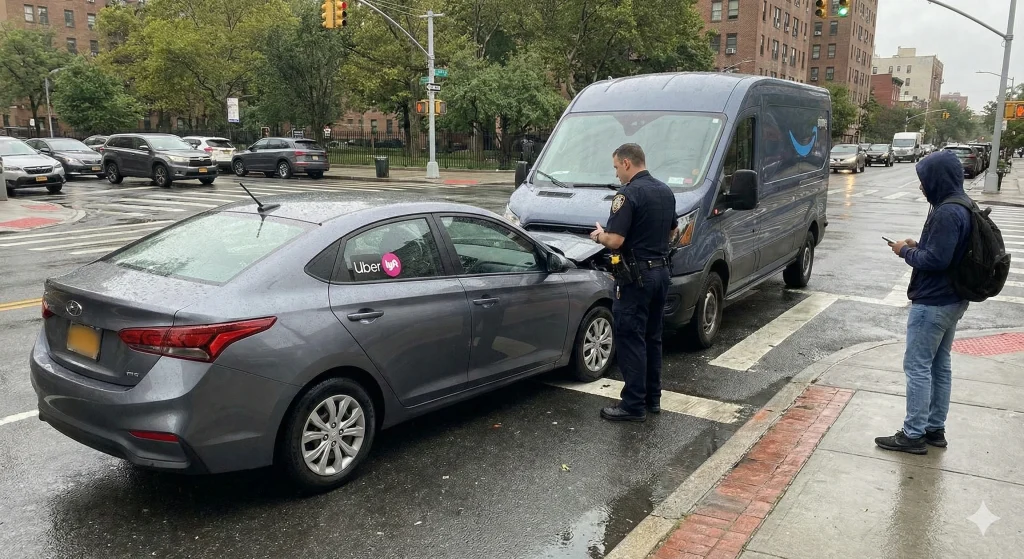
A Lithonia rideshare accident lawyer understands that a rideshare collision in Lithonia draws together Georgia tort law, transportation network company insurance requirements, and the fault rules that govern every motor vehicle crash in this state. Determining who ultimately pays—whether it is an individual driver, a rideshare carrier’s commercial policy, or another motorist—depends largely on the driver’s status on the app at the moment of impact, the allocation of fault under Georgia’s modified comparative negligence framework, and the interaction between multiple layers of motor vehicle insurance coverage.
Georgia’s fault system and rideshare crashes
Georgia is a fault-based state, which means that the party whose negligence proximately caused the collision is generally responsible for the resulting bodily injury and property damage. Under Georgia’s modified comparative negligence rule, an injured person may recover damages so long as that person’s share of fault does not reach 50 percent, and any award is reduced in proportion to the claimant’s negligence. In a rideshare context, this system applies whether the injured person is a rideshare passenger, a third-party motorist, a pedestrian in Lithonia, or even the rideshare driver seeking compensation from another at‑fault driver.
Because Lithonia lies within DeKalb County, regional traffic safety patterns provide context for how serious crash outcomes can be even in routine trips. Recent analyses show that DeKalb County has some of the highest motor vehicle fatality numbers and nighttime crash deaths in the Metro Atlanta region, highlighting the elevated risks associated with late-night and high‑volume corridors that rideshare vehicles frequently use. In such an environment, the allocation of fault after a rideshare collision becomes central to identifying which insurer will be called upon to defend the claim and pay any judgment.
How transportation network companies are defined in Georgia
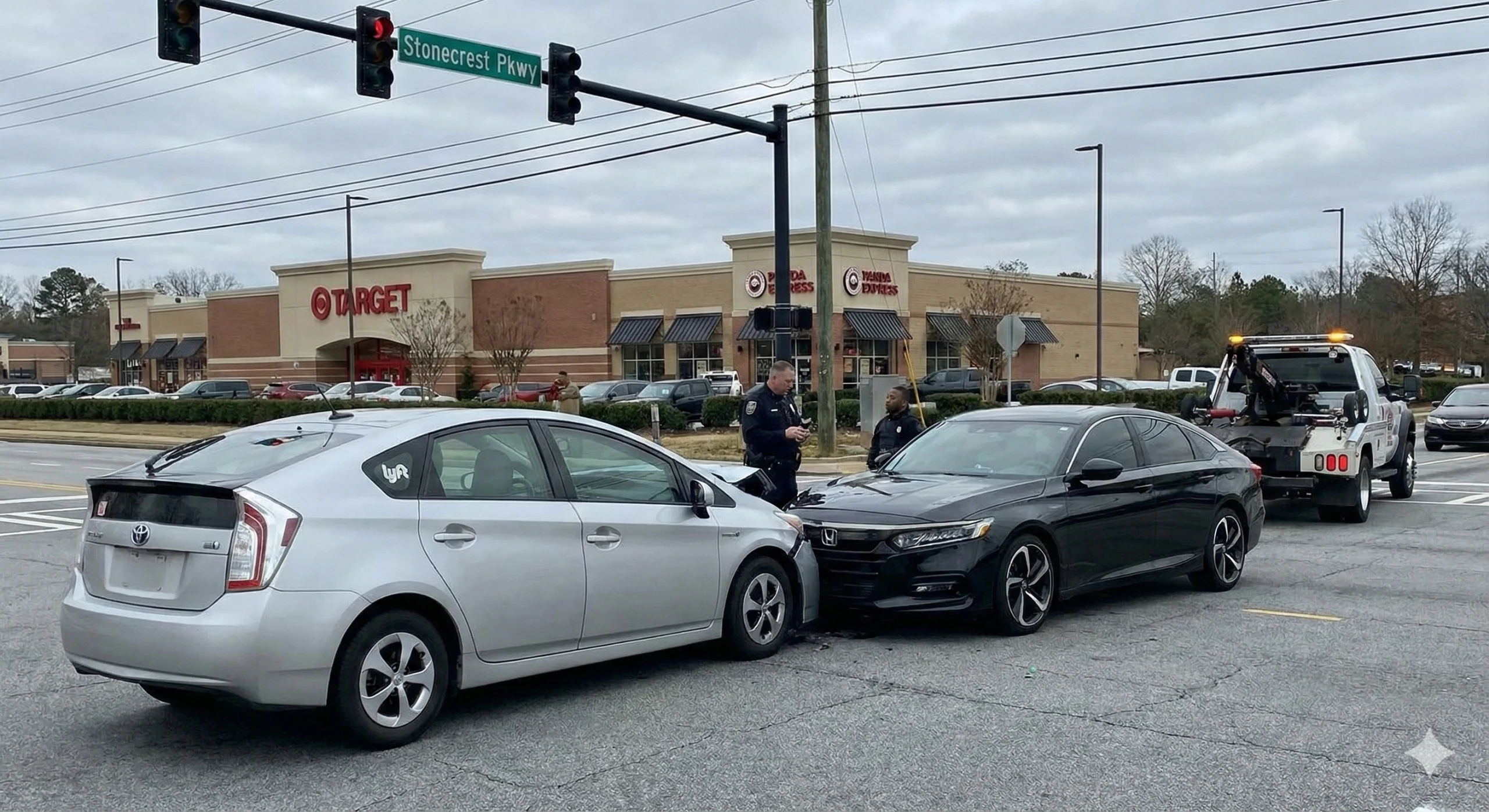
Georgia law classifies entities such as Uber and Lyft as “transportation network companies” (TNCs), which use digital platforms to connect riders with drivers operating personal vehicles for compensation. This classification is important, because Georgia statutes impose specific insurance requirements on TNCs and their drivers that differ from standard private passenger vehicle policies, particularly during the period when the driver is logged into the app and providing TNC services. By drawing this statutory distinction, the Georgia legislature ensures that rideshare passengers and the public have access to higher minimum limits and primary commercial coverage at key points in the trip.
Under Georgia Code § 33‑1‑24, a TNC must maintain or cause to be maintained a primary motor vehicle insurance policy that expressly recognizes the driver as a TNC driver and covers the driver’s use of a vehicle for TNC services. This statute also delineates when the TNC policy is primary and how it coordinates with any personal auto insurance carried by the driver, thereby shaping who pays first when a crash occurs in or near Lithonia while the app is active. An analysis by a Lithonia rideshare accident lawyer will almost always begin with this statutory framework to determine which policy is implicated.
Georgia insurance tiers for rideshare drivers
Insurance obligations for a rideshare driver in Georgia are divided into distinct time periods tied to the driver’s connection with the app. When the driver is not logged into the rideshare platform, any accident is governed by ordinary Georgia minimum liability insurance requirements, and the driver’s personal auto policy stands as the primary coverage. Once the driver logs into the app and is available to accept ride requests, TNC-specific coverage comes into play and supplements or replaces the driver’s personal policy, depending on policy language and statutory requirements.
Georgia law and industry practices reflect a tiered structure: while the driver is logged in and waiting for a ride request, TNCs must provide at least a specified level of contingent liability coverage above the driver’s own policy; once a trip is accepted or a passenger is in the vehicle, the required coverage increases significantly to a primary policy that can reach a minimum of one million dollars per occurrence for death, personal injury, and property damage. This tiered system means that the timing of the crash relative to the driver’s TNC activity is one of the most important factual questions a Lithonia rideshare accident lawyer will investigate when identifying who pays.
When the rideshare driver is off the app
If a rideshare driver is operating a vehicle in Lithonia but is not logged into the rideshare application at the time of the crash, Georgia law treats that motorist as an ordinary driver rather than as a TNC operator. In that scenario, the driver’s personal auto liability coverage—subject to Georgia’s minimum limits for bodily injury and property damage—serves as the primary source of payment for any injured party. This means that the rideshare company’s commercial policy is generally not implicated, because the driver is not considered to be providing TNC services during that period.
However, disputes can arise if there is uncertainty about whether the app was open or whether the driver had recently toggled on availability before the collision. A Lithonia rideshare accident lawyer may need to seek electronic records, trip logs, or telematics data to determine whether TNC coverage should apply and whether the driver’s personal insurer can properly deny or limit coverage by invoking exclusions for commercial use.
Logged in and waiting for a ride request
Once a rideshare driver in Lithonia has logged into the app and is available to accept passengers, Georgia statutes and TNC policies provide a layer of contingent coverage that supplements the driver’s personal insurance. During this period, if a crash occurs and the driver is found at fault, the injured party may seek compensation first from the driver’s personal policy; if that policy is insufficient or denies coverage, the TNC’s contingent liability coverage may respond up to the statutory minimum limits mandated for this phase.
Typical coverage structures in Georgia provide defined minimums per person and per accident for bodily injury and a separate amount for property damage during the “app on, no passenger” period, though the exact figures are shaped by statutory baselines and TNC policy language. A Lithonia rideshare accident lawyer evaluating such a claim will analyze whether the driver’s own insurer has denied coverage based on a business-use exclusion, how the TNC’s contingent policy is triggered, and whether additional uninsured or underinsured motorist coverage is available to injured passengers or third parties.
Accepted trip or passenger in the vehicle
The insurance landscape changes significantly once the driver has accepted a ride request or is actively transporting a passenger around Lithonia and DeKalb County. At that point, Georgia regulations require TNCs to maintain a primary policy with at least one million dollars in coverage per occurrence for combined bodily injury and property damage, as well as statutorily required uninsured and underinsured motorist coverage. This primary policy generally takes precedence over the driver’s personal insurance, meaning that claims by passengers and third parties are directed to the rideshare company’s commercial insurer in the first instance.
In a serious collision, such as one occurring at a busy intersection in Lithonia, this higher coverage limit can be critical to addressing extensive medical expenses, lost income, and long-term impairment. A Lithonia rideshare accident lawyer may also consider whether multiple claimants will compete for the same policy limits, how Georgia’s rules on apportionment of damages apply, and whether additional coverage—such as excess or umbrella policies—might be implicated in cases involving catastrophic harm.
Who pays when another driver is at fault?
Not every rideshare accident in Lithonia is caused by the rideshare driver. When another motorist’s negligence is the primary cause of the crash, Georgia’s fault rules direct claims first to that at‑fault driver’s liability insurer, regardless of whether a rideshare passenger is involved. In such a case, the rideshare driver and any passengers will ordinarily present bodily injury and property damage claims to the other driver’s insurer, and that insurer becomes the primary payer up to its policy limits.
If that at‑fault driver carries insufficient liability coverage to compensate all injuries, rideshare-related uninsured or underinsured motorist coverage may become available, particularly during the period when the app is active and the trip is in progress. A Lithonia rideshare accident lawyer will examine whether the TNC’s uninsured motorist coverage applies, whether passengers have their own personal uninsured motorist policies that can be stacked, and how Georgia’s statutory rules on offset and coordination of benefits affect the final recovery.
Fault disputes and shared responsibility
Multi-vehicle collisions frequently involve disputed liability and competing narratives about how the crash occurred. Georgia’s modified comparative negligence rule allows a court or jury to assign percentages of fault to multiple parties, including the rideshare driver, another motorist, or even a pedestrian, with compensation adjusted accordingly. In such shared-fault scenarios, each insurer pays according to its insured’s allocated share of responsibility, subject to policy limits.
For instance, if a rideshare driver in Lithonia is partially responsible for failing to maintain a proper lookout, while another driver is primarily responsible for speeding or disregarding a traffic signal, both liability insurers may bear a portion of the financial burden. A Lithonia rideshare accident lawyer reviewing the case may analyze police reports, Georgia Department of Transportation crash data, and any available surveillance or dash‑cam footage to understand how fault should be apportioned and which insurers ultimately owe payment.
Role of police reports and crash data
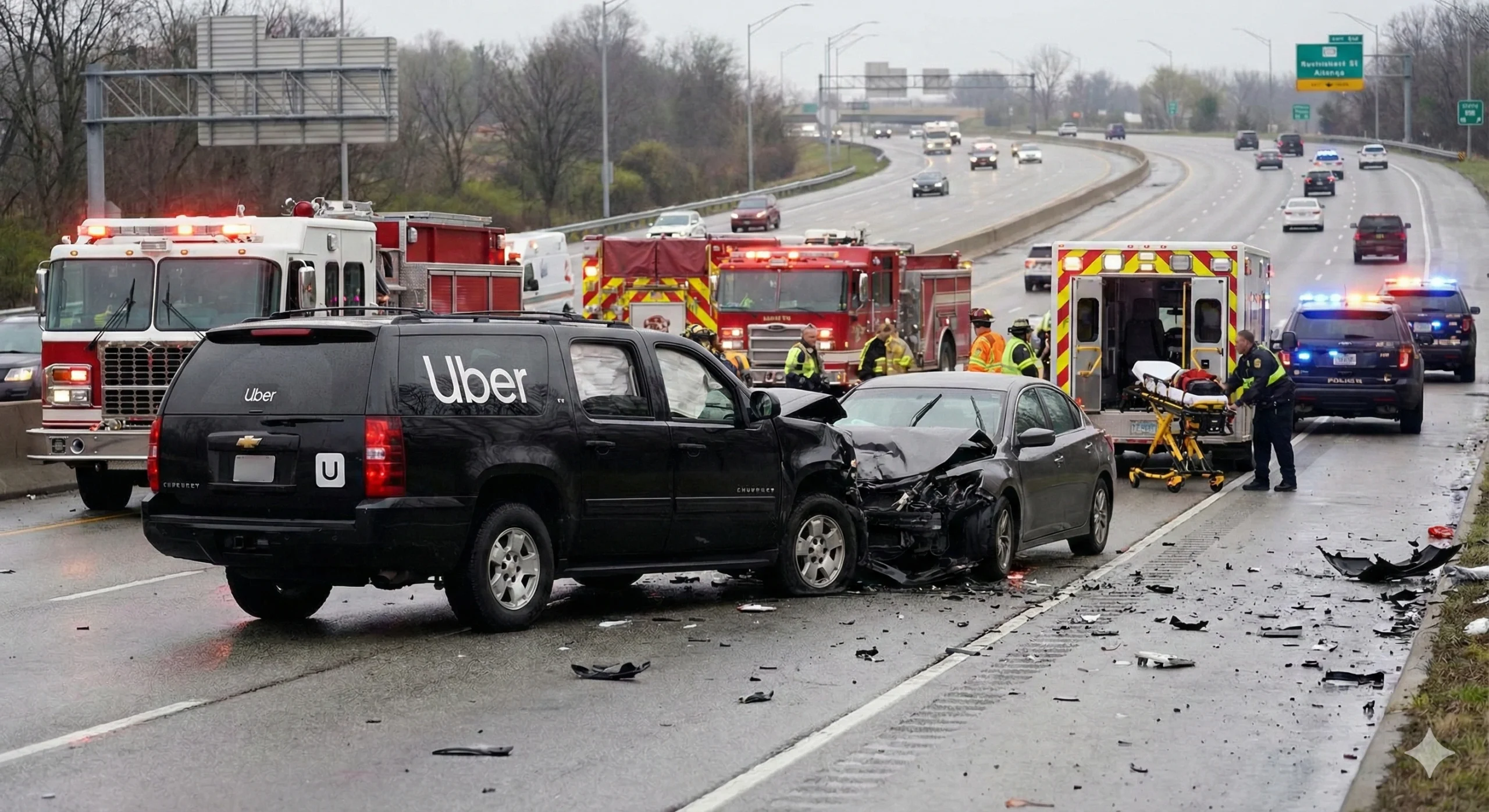
In Georgia, serious motor vehicle collisions, including those involving rideshare vehicles, generally result in law enforcement crash reports prepared under statewide reporting protocols. These reports often document the vehicles involved, apparent contributing factors such as speeding or failure to yield, and whether any citations were issued, all of which can influence insurers’ initial decisions on liability and payment. Although such reports do not determine civil liability conclusively, they are important evidentiary starting points in a rideshare claim arising out of a Lithonia crash.
Statewide and county-level crash data also provide context regarding traffic safety conditions that might be relevant to litigation or settlement negotiations. DeKalb County has experienced elevated crash severity and a notable share of nighttime and impaired‑driving fatalities, factors that can be pertinent when a Lithonia rideshare accident lawyer analyzes foreseeable risks on certain corridors, evaluates arguments about driver conduct, or explains the background environment to a fact‑finder.
Government insurance requirements and public safety policy
Georgia’s statutory framework for TNC insurance reflects broader public safety objectives aimed at ensuring adequate financial protection for riders and the public. State law requires motor vehicle owners to maintain minimum liability coverage, and it imposes additional obligations on TNCs to provide primary and contingent insurance during specific phases of rideshare activity, thereby reducing the likelihood that an injured party will be left without a viable source of recovery. These rules function alongside administrative oversight and licensing requirements for TNCs operating in Georgia.
The Georgia Department of Revenue provides public guidance on minimum auto insurance obligations and enforcement mechanisms, including potential penalties for operating a vehicle without required coverage. By combining general vehicle insurance rules with TNC-specific mandates under provisions such as Georgia Code § 33‑1‑24, the state seeks to align rideshare operations with established public safety frameworks and to clarify who pays when crashes occur on local roads in and around Lithonia. For authoritative information on state insurance obligations, the Georgia Department of Revenue maintains detailed resources for motorists and insurers.
Case-law style issues in rideshare liability
Although many rideshare claims resolve through negotiation, the underlying disputes often mirror traditional tort litigation issues seen in Georgia appellate decisions involving commercial carriers and common carriers. Courts may analyze whether the rideshare driver breached a duty of reasonable care, whether the TNC can be held directly liable for negligent hiring or supervision under Georgia law, and how contractual independent‑contractor arrangements intersect with statutory insurance mandates. These questions influence whether payment responsibility rests solely with a driver’s policy or whether the TNC’s insurer must respond to theories of vicarious or direct liability.
In addition, Georgia courts have long addressed the allocation of damages in multi‑claimant events, the interpretation of policy language concerning “primary” versus “excess” coverage, and disputes over business‑use exclusions in personal auto policies. When similar issues arise in rideshare contexts, a Lithonia rideshare accident lawyer may employ case‑law style reasoning, comparing the facts of a particular collision to prior rulings to assess how a court might allocate financial responsibility among multiple insurers and defendants.
Interplay between personal and commercial insurance
Most standard personal auto policies in Georgia contain exclusions for vehicles used to carry passengers for a fee, which can create tension between personal insurers and TNC insurers after a rideshare crash. If a driver’s personal carrier invokes such an exclusion, the TNC’s primary or contingent policy may bear more of the financial burden, depending on the phase of the ride and the statutory requirements in effect at the time. The question of who pays can therefore turn on the precise policy wording and the timing of the driver’s activities.
TNC policies are generally drafted with express recognition of the driver’s commercial role and the app‑based phase structure, with separate insuring agreements for the “app on, no trip,” “en route,” and “passenger in vehicle” stages. A Lithonia rideshare accident lawyer evaluating coverage will typically review declarations pages, endorsements, and any Georgia‑specific riders to determine whether an insurer may legitimately decline coverage or must provide a defense and indemnity for claims arising from a Lithonia collision.
Payment obligations to passengers
Passengers injured while using a rideshare service around Lithonia usually have a direct path to seek compensation from the TNC’s primary liability coverage when the trip is active. Because Georgia law requires substantial coverage during the accepted trip and passenger‑transport phases, passengers may pursue claims for medical expenses, lost wages, and non‑economic harm against the rideshare carrier’s commercial policy, subject to proof of negligence and causation. If another driver is primarily responsible, passengers may first proceed against that driver’s insurer and then look to rideshare-related uninsured or underinsured motorist coverage if necessary.
The analysis becomes more complex if multiple passengers are injured or if there are claimants in multiple vehicles, as the one‑million‑dollar minimum per occurrence must be allocated among all claimants. In that circumstance, a Lithonia rideshare accident lawyer can evaluate whether additional coverage sources exist, such as separate personal uninsured motorist policies or health insurance, and how Georgia rules regarding setoffs, subrogation, and collateral sources influence the net amount each passenger ultimately receives.
Third-party motorists and pedestrians
Third-party motorists and pedestrians in Lithonia who are struck by a rideshare vehicle have claims that resemble traditional auto accident claims, but with particular attention to TNC coverage triggers. If the rideshare driver is logged into the app or transporting a passenger at the time of the collision, the TNC’s liability policy may serve as either primary or excess coverage, thereby expanding the pool of funds available beyond the driver’s personal limits. These injured third parties may assert bodily injury claims directly against the rideshare driver and, in appropriate circumstances, pursue direct actions against the TNC’s insurer under Georgia procedural rules.
Pedestrian safety concerns are especially relevant in DeKalb County, where recent data show a high number of pedestrian fatalities and serious injuries on major corridors. A Lithonia rideshare accident lawyer reviewing a pedestrian claim may rely on roadway design studies, traffic volume data, and law enforcement reports to address foreseeability, duty of care, and the standard of reasonable conduct for rideshare drivers operating in dense or poorly lit areas.
Economic and non‑economic losses in rideshare claims
When determining what an insurer must pay after a rideshare accident, Georgia law recognizes both economic and non‑economic damages, subject to proof and statutory limitations. Economic losses typically include medical expenses, rehabilitation costs, lost income, and property damage, while non‑economic damages can encompass pain and suffering and loss of enjoyment of life. The scope of coverage and available policy limits will influence the extent to which these categories of damages can be compensated.
In particularly severe cases involving catastrophic injuries or fatalities, punitive damages may be considered if the conduct at issue reflects a level of culpability beyond ordinary negligence, such as reckless driving or extreme impairment. A Lithonia rideshare accident lawyer must evaluate both the factual record and Georgia’s statutory caps and standards for punitive awards to assess whether such damages are available and from which insurer payment might ultimately be sought.
Procedural steps after a Lithonia rideshare accident
From a procedural standpoint, the allocation of payment responsibility is shaped by the steps taken in the days and weeks following a crash. Injured parties typically report the collision to law enforcement, seek prompt medical evaluation, notify the relevant insurers, and preserve evidence such as photographs, app screenshots, and witness details, all of which support later liability and coverage determinations. Failure to provide timely notice or to comply with policy conditions can affect whether a particular insurer is obligated to defend and pay.
Georgia’s statute of limitations for personal injury claims, which usually provides a defined period from the date of the accident to file suit, also influences payment outcomes because insurers often rely on these deadlines to close files if litigation is not initiated. A Lithonia rideshare accident lawyer will factor these procedural issues into any assessment of who pays, particularly when multiple insurers are involved and coordination of coverage requires careful attention to notice, cooperation, and filing requirements under Georgia law.
Local context: Lithonia and DeKalb County road conditions
Traffic patterns, roadway design, and enforcement practices in and around Lithonia can shape both the likelihood of rideshare collisions and the analysis of reasonable driver behavior. DeKalb County’s higher incidence of traffic fatalities and nighttime crashes suggests that drivers operating rideshare vehicles in this area face increased risk, especially on major corridors and at high‑volume intersections. These conditions frame how negligence and foreseeability are evaluated when determining which insurer bears financial responsibility.
Public agencies gather and publish crash data that can assist in understanding these local trends. The Georgia Department of Transportation’s crash reporting systems and DeKalb County planning documents supply information about crash frequency, severity, and contributing factors, all of which may be referenced by a Lithonia rideshare accident lawyer when evaluating liability and the reasonableness of driver conduct in specific corridors. For general statewide crash data and reporting resources, the Georgia Department of Transportation offers an accessible portal.
How a Lithonia rideshare accident lawyer analyzes overlapping claims
When multiple claimants and multiple insurance policies are involved, the allocation of payment responsibilities often requires a structured legal analysis. A Lithonia rideshare accident lawyer may start by confirming the driver’s status on the app, identifying all potentially applicable liability, uninsured motorist, and medical payments coverages, and then mapping those policies against Georgia statutory requirements and policy priority rules. This involves determining which carrier is primary, which is excess, and how limits and exclusions may operate in combination.
The lawyer may also evaluate whether any direct claims exist against the TNC for negligent hiring, retention, or supervision, as well as whether any third parties, such as vehicle owners or contractors responsible for roadway maintenance, bear a share of fault. In that way, a Lithonia rideshare accident lawyer integrates statutory insurance mandates, case‑law principles, and factual investigation to determine who pays and in what sequence after a rideshare crash in Lithonia.
Many riders and drivers are unfamiliar with the complex insurance and liability structure surrounding rideshare operations in Georgia. For those seeking deeper context about local practice and litigation involving rideshare collisions near Lithonia, some may consult a highly experienced Lithonia rideshare accident lawyer, which explores how local counsel approaches investigations, negotiations, and litigation in these cases. In addition, state agencies maintain resources on vehicle insurance, TNC requirements, and traffic safety initiatives that can help individuals understand the public policy background behind who pays after a crash.
For authoritative guidance on general vehicle insurance obligations in Georgia, including minimum liability limits and enforcement policies, members of the public can review the Georgia Department of Revenue’s vehicle insurance requirements page, which explains statutory coverage duties for motorists statewide. This public information, combined with the more specialized rules governing transportation network companies under Georgia Code § 33‑1‑24, forms a key part of the legal framework a Lithonia rideshare accident lawyer will apply when evaluating payment responsibility after a rideshare collision.
Frequently Asked Questions about liability after a rideshare accident in Lithonia
Who pays first after a rideshare accident in Lithonia if the driver was on the app but had not yet picked up a passenger?
When a rideshare driver in Lithonia is logged into the app and available for ride requests but has not yet accepted a trip, Georgia’s framework generally places the driver’s personal auto policy as the first line of coverage for any at‑fault collision, with the TNC’s contingent liability policy stepping in only if the personal coverage is unavailable or insufficient. The precise allocation depends on policy language and statutory minimums for the “app on, no passenger” phase under Georgia Code § 33‑1‑24, so a Lithonia rideshare accident lawyer typically reviews both the personal and TNC policies to confirm which insurer must defend and indemnify claims arising from the crash.
If another driver caused the rideshare accident, does the rideshare company still have to pay?
If a third‑party motorist is primarily responsible for a collision involving a rideshare vehicle in Lithonia, that at‑fault driver’s liability insurer ordinarily bears primary responsibility for compensating injured passengers, the rideshare driver, and any other victims, up to the limits of the policy. Rideshare‑related uninsured or underinsured motorist coverage may then provide additional compensation if the at‑fault driver’s insurance is inadequate, and a Lithonia rideshare accident lawyer will analyze how Georgia’s rules on stacking and coordination of benefits affect the ability to obtain further payment from TNC coverage or personal policies.
How does Georgia’s comparative negligence rule affect who pays in a rideshare crash?
Georgia’s modified comparative negligence rule allows a claimant to recover so long as that person’s share of fault remains below 50 percent, with any award reduced in proportion to the claimant’s negligence. In a rideshare collision, this means that payment responsibility can be divided among multiple drivers and insurers based on assigned fault percentages, and a Lithonia rideshare accident lawyer will assess how those allocations interact with policy limits and priority rules when determining which insurer must ultimately pay and in what amount.
Are rideshare passengers in Lithonia protected if the at‑fault driver has no insurance?
Rideshare passengers injured in Lithonia generally have access to uninsured and underinsured motorist coverage associated with the TNC when the trip is active, especially once the driver has accepted a ride or is transporting a passenger. If the at‑fault driver lacks insurance or carries insufficient limits, a Lithonia rideshare accident lawyer can evaluate whether TNC‑provided uninsured motorist coverage applies, whether the passenger has personal uninsured motorist coverage that can be stacked, and how Georgia’s statutory rules govern offsets and the order in which these coverages must pay.
Does the rideshare driver’s personal insurance still apply once a passenger is in the vehicle?
During the period when a passenger is in the vehicle or the rideshare driver in Lithonia is en route to pick up a rider, Georgia law generally makes the TNC’s commercial policy the primary coverage, with limits that can reach at least one million dollars for combined bodily injury and property damage. The driver’s personal policy may still exist in the background as potential excess coverage, but many personal auto insurers invoke commercial‑use exclusions, so a Lithonia rideshare accident lawyer typically reviews both policies to determine whether the personal carrier has any continuing obligation to contribute once the TNC’s primary limits are exhausted.
How does a Lithonia rideshare accident lawyer determine whether the rideshare company itself can be held directly liable?
Beyond insurance coverage, questions sometimes arise about whether the rideshare company can be held directly liable under theories such as negligent hiring, retention, or supervision, particularly if a driver has a problematic history that should have been identified through screening. In examining this issue, a Lithonia rideshare accident lawyer may compare the company’s driver‑vetting practices against Georgia statutory requirements and public safety guidelines, review any internal policies provided in discovery, and analyze whether prior case law involving commercial carriers supports extending direct liability to the TNC in addition to requiring its insurer to pay under mandated coverage provisions.


