The Sequined Blazer

The Sequined Blazer

Power of Collaboration

Myrtle Beach Personal Injury Attorney Explains: Changes in South Carolina Injury Laws for 2025
Myrtle Beach Personal Injury Law

Myrtle Beach personal injury attorney often fields questions about how evolving statutes shape claims for those harmed in accidents across Horry County. These updates, primarily through House Bill 3430 signed into law on May 12, 2025, by Governor Henry McMaster, introduce reforms to joint and several liability, alcohol server responsibilities, and insurance mandates, effective for causes of action accruing after January 1, 2026. This legislation addresses longstanding concerns over fault apportionment and business liability while preserving core principles of comparative negligence under South Carolina Code Section 15-38-15.

Tort Reform Overview

House Bill 3430, also known as Act 42, marks a pivotal shift in South Carolina’s approach to personal injury litigation by modifying the apportionment of fault in multi-party cases. Courts must now consider the negligence of nonparties—those who settle early or evade suit—alongside named defendants when assigning percentages on the verdict form, overruling prior precedents like Machin v. Carus Corp. that limited such inclusions. This “empty chair defense” ensures defendants bear only their proportional share of indivisible damages, provided their fault does not exceed 50 percent, fundamentally altering recovery strategies for plaintiffs pursuing full compensation.

The reform retains South Carolina’s modified comparative negligence framework, where plaintiffs recover if their fault is 50 percent or less, with damages reduced by their share. However, joint and several liability applies solely to economic damages for defendants over 50 percent at fault, while noneconomic damages remain several only. For instance, in a multi-vehicle collision, a jury might allocate 40 percent fault to a sued driver, 35 percent to a settled nonparty, and 25 percent to the plaintiff; the sued driver pays only 40 percent of total damages, capping exposure regardless of the settling party’s insurance limits.

These changes stem from legislative efforts to curb perceived excesses in tort liability, particularly amid rising commercial insurance premiums, without imposing broad damage caps seen in other states. Businesses and insurers advocated for this balance, arguing it promotes fairness by preventing “deep pocket” defendants from covering others’ shares entirely. Yet, plaintiffs face heightened burdens in naming all potential tortfeasors early, as failure to do so risks under-recovery if nonparties absorb significant fault percentages.

Joint and Several Liability Changes

Under the amended Section 15-38-15, juries determine fault percentages for plaintiffs, defendants, and qualifying nonparties whose acts proximately caused damages, with nonparties defined to include settled parties if evidence supports their role beyond a directed verdict threshold. A defendant may move within 180 days of action commencement to add such nonparties to the verdict form, bearing the proof burden unless plaintiffs amend claims against them, which tolls statutes of limitations. This procedural shift empowers defendants to allocate risk more equitably, as seen in scenarios where a minor-fault party previously shouldered full non-settled damages.

Exceptions preserve joint liability in cases of intentional torts, concerted action, or governmental claims, ensuring reckless actors like DUI offenders over 50 percent at fault remain fully responsible for economic losses. In alcohol-related crashes, licensees face a 50 percent cap on total damages if their DUI-charged patron exceeds that fault threshold, though plaintiffs can counter by rejoining settled drivers, triggering shared liability. Such nuances demand precise pretrial motions, as courts apply Rule 50 standards to exclude baseless additions, maintaining evidentiary rigor.

This framework contrasts with pre-reform law, where “defendants only” apportionment left remaining parties liable for settled shares post-offset, often inflating verdicts against solvent defendants. Now, with total fault summing to 100 percent inclusive of plaintiff negligence, recoveries align more closely with causation, though critics note potential shortfalls for victims against underinsured nonparties. South Carolina courts will interpret these provisions through case law, likely emphasizing proximate cause proofs in instructions.

Alcohol Liability Reforms

A cornerstone of the 2025 changes mandates liquor liability insurance for on-premises alcohol sellers post-5:00 PM, starting at $1 million aggregate, reducible via risk mitigation like midnight sales cutoffs ($250,000 relief), server training ($100,000 per measure), or ID scanners. Establishments implementing multiple safeguards—such as non-profits gaining $500,000 reductions—gain cost relief while enhancing public safety, aligning with dram shop principles under new Section 15-3-710. Licensees escape liability absent proof of knowingly serving visibly intoxicated patrons, with “visibly intoxicated” gauged by trained server standards.

New dram shop liability under Section 15-3-710 limits suits to proximate overservice cases, barring claims by adults knowingly riding with intoxicated drivers or entrusting property to them. Minors retain broader recourse for illegal service, rebuttable by forensic ID verification. Penalties escalate for repeat violations: fines, suspensions, or revocations, with judgments forwarded to the Department of Revenue for permit reviews. This codifies civil accountability without vicarious liability expansions, focusing on direct negligence.

Mandatory alcohol server training, via Department of Revenue-approved programs (four-hour online courses covering BAC factors, fake ID detection, and DUI stats), requires certification for servers and managers within 30 days of hire. Providers report completions promptly, with revocations for non-compliance, fostering proactive intoxication prevention amid Myrtle Beach’s tourism-driven bar scene. These measures, effective 2026, integrate with SLED data on impaired driving, reducing litigation incentives through prevention.

Workers’ Compensation Adjustments

Separate from tort reform, South Carolina’s workers’ compensation updates effective January 1, 2025, raise the maximum weekly benefit to $1,134.43, reflecting wage inflation, alongside $0.70/mile medical travel reimbursement. These enhancements aid injured workers in coastal industries like hospitality, where Myrtle Beach personal injury attorney consultations often overlap with comp claims for aggravated injuries. Calculations factor average weekly wage, disability extent, and treatment needs, ensuring fuller wage replacement without litigation.

Exclusivity bars third-party suits absent employer negligence, but coordination with personal injury claims persists for non-work-related aggravations. Courts scrutinize dual recoveries, applying offsets per Section 42-1-550 to prevent double-dipping. These modest hikes signal ongoing adjustments to economic realities, though caps persist, prompting strategic claim filings.

Auto Insurance Minimums Proposed

Bill 3267, introduced January 2025, seeks to amend Section 38-77-140 by mandating $150,000 per person for fatal bodily injury atop existing $25,000/$50,000/$25,000 limits, pending committee action. If enacted, this bolsters payouts for wrongful death claims common in high-traffic Myrtle Beach corridors, though uninsured motorist reforms exclude punitive coverage. Plaintiffs must navigate these alongside tort changes, emphasizing policy reviews.

An experienced Myrtle Beach personal injury attorney can assess how such proposals intersect with fault apportionment, advising on UM/UIM elections. For official legislative tracking, consult the South Carolina Legislature’s bill status page at https://www.scstatehouse.gov/.

Procedural and Evidentiary Impacts

Reforms refine venue for John Doe suits to injury sites under new Section 15-7-65, streamlining discovery, while Section 56-5-6540 admits seatbelt nonuse as comparative negligence evidence. Bad faith liability actions gain Section 38-59-23 clarity, balancing insurer accountability. These procedural tweaks demand updated pleadings, with 60-day amendment windows for added parties.

Trial courts gain discretion on fault inclusions, excluding workers’ comp immunes or intentional tort nonparties, preserving equity. Expect appellate scrutiny on “reasonable basis” motions, shaping 2026 dockets.

Implications for Plaintiffs and Defendants

Plaintiffs must front-load investigations to counter empty chairs, potentially extending statutes via tolling, while defendants leverage apportionment to mitigate verdicts. In Myrtle Beach’s accident-prone environment—beaches, bridges, tourists—Myrtle Beach personal injury attorney roles evolve toward holistic case valuation. Businesses benefit from predictable liabilities, fostering economic stability.

Long-term, reduced insurance drives venue investments, but victims risk gaps against insolvent nonparties, underscoring diligent prosecution.

reliable Myrtle Beach Personal Injury Attorney

FAQ

What do the 2025 South Carolina tort reforms mean for multi-defendant personal injury cases?

The 2025 amendments to Section 15-38-15 via House Bill 3430 require juries to apportion fault among all proximate contributors, including settled nonparties added to verdict forms upon defendant motion if evidence suffices beyond directed verdict standards. Defendants under 50 percent fault pay only their share of damages, with joint liability limited to economic losses for higher-fault parties, excepting intentional acts or alcohol cases capped at 50 percent for licensees. This shifts from defendant-only calculations, compelling plaintiffs to sue comprehensively or accept proportional recoveries, while preserving comparative negligence barring suits over 50 percent plaintiff fault.

How have alcohol server liability rules changed under 2025 South Carolina injury laws?

New dram shop provisions in Section 15-3-710 hold licensees liable only for knowingly serving visibly intoxicated patrons as proximate cause, with defenses for adults riding knowingly with impaired drivers and ID-verified minor service. Mandatory $1 million insurance drops with mitigations like training or sales cutoffs, paired with certified server programs teaching intoxication signs, BAC effects, and refusal techniques under Department of Revenue oversight. Violations trigger escalating penalties and permit actions, prioritizing prevention over broad vicarious liability in personal injury claims.

Will the 2025 changes affect recovery in Myrtle Beach personal injury attorney-handled car accident cases?

In car wrecks, reformed joint liability incorporates nonparty drivers or premises, potentially diluting payouts from sued parties despite minimum coverages, with proposed $150,000 fatality boosts pending in Bill 3267. Uninsured motorist exclusions for punitives limit stackable recoveries, while seatbelt evidence bolsters defenses; Horry County plaintiffs benefit from venue fixes but must prove full causation chains. These align damages closer to individual negligence, impacting settlement dynamics in tourist-heavy crashes.

What workers’ compensation updates apply to 2025 injury claims in South Carolina?

Effective January 1, 2025, maximum weekly benefits rise to $1,134.43 with $0.70/mile reimbursements, calculated on pre-injury wages, body parts affected, disability ratings, and treatments, exclusive of third-party tort suits save offsets. This aids temporary total disability claimants without altering permanency schedules, coordinating with personal injury for non-employer negligence. Injured workers file within two years, navigating carrier disputes via single commissioners.

How do insurance requirements shift for South Carolina drivers and businesses in 2025?

Auto policies face no immediate hikes beyond proposals, but alcohol venues require $1 million coverage reducible by compliance, while UM/UIM drops punitive mandates. Businesses cutting sales at midnight or training staff slash premiums, curbing dram shop exposures; drivers maintain $25K/$50K/$25K minima, with fatality add-ons tabled. These foster safer practices, indirectly aiding injury claimants via better-funded defendants.

When do these South Carolina injury law changes take effect for new claims?

Tort and liquor reforms apply to causes accruing post-January 1, 2026, per Act 42, excluding prior PFAS/asbestos suits; workers’ comp benefits activated January 1, 2025. Bill 3267 awaits passage for auto deaths. Consult statutes for accrual triggers like injury dates, ensuring timely filings within three-year limits.


admin December 12, 2025 Leave A Comment Permalink

Top Mistakes Entrepreneurs Make Before Hiring an Intellectual Property Attorney in New York City

intellectual property attorney in New York

Entrepreneurs launching ventures in New York City often overlook critical steps in safeguarding their innovations, leading to vulnerabilities under federal and state intellectual property laws. Common errors occur before engaging an intellectual property attorney in New York City, exposing businesses to disputes that drain resources and hinder growth. This article examines these pitfalls through legal frameworks, statutory references, and case examples to highlight procedural necessities.

Failing to Identify Protectable IP Assets

Entrepreneurs frequently underestimate the scope of intellectual property, assuming only patents merit attention while neglecting trademarks, copyrights, and trade secrets that form the backbone of competitive advantage. Under the Lanham Act, 15 U.S.C. § 1051 et seq., trademarks protect brand identifiers, yet many proceed without assessing whether logos or slogans qualify as distinctive marks eligible for registration with the United States Patent and Trademark Office. This oversight becomes acute in New York City, where dense markets amplify infringement risks, as courts in the Southern District of New York routinely handle cases involving unregistered marks leading to loss of priority rights.

The failure to catalog assets early prevents strategic decisions on protection modes; for instance, trade secrets under New York’s common law and the federal Defend Trade Secrets Act, 18 U.S.C. § 1831 et seq., require reasonable secrecy measures from inception, not retroactive fixes. Without initial audits, entrepreneurs miss opportunities to leverage Section 203-f of New York Labor Law, which limits employer claims to employee inventions developed off-duty without company resources. Such gaps often surface in disputes, where courts deny enforcement due to absent foundational documentation, underscoring the need for preliminary evaluations aligned with USPTO guidelines.

Skipping Comprehensive Trademark Searches

A prevalent error involves launching brands without conducting thorough trademark clearance searches, inviting opposition proceedings or cancellation actions post-investment. Federal registration under the Lanham Act confers nationwide priority from filing date, but prior common-law use by others in New York can prevail if searches overlook state databases or common-law rights evidenced by local advertising. New York courts, applying the Polaroid factors from Polaroid Corp. v. Polarad Elecs. Corp., 287 F.2d 492 (2d Cir. 1961), assess likelihood of confusion based on mark strength, similarity, and trade channels, often ruling against unprepared filers.

Entrepreneurs compound this by relying on basic online tools rather than comprehensive searches covering USPTO records, state registries, domain availability, and internet usage, as recommended in USPTO toolkits for small entities. In high-stakes New York City markets, where overlapping trade channels heighten confusion risks, unvetted marks lead to rebranding costs exceeding initial legal fees, with pendency data showing USPTO first-action reviews averaging 5.6 months in 2025. Proactive searches mitigate these exposures, ensuring marks meet distinctiveness standards under 15 U.S.C. § 1052 to avoid descriptiveness refusals.

Overlooking IP Ownership in Agreements

Many entrepreneurs engage contractors or employees without IP assignment clauses, resulting in disputed ownership where creators retain rights absent explicit transfers. Under New York Labor Law § 203-f, employers cannot claim inventions made on personal time without company facilities, necessitating tailored agreements distinguishing work-for-hire from non-assignable creations. Federal copyright law, 17 U.S.C. § 201(b), presumes employee works belong to employers, but freelancers demand written assignments, a nuance lost in hasty contracts leading to chain-of-title defects.

This mistake escalates in bootstrapped New York startups outsourcing development, as courts invalidate vague provisions, forcing costly fixes via quitclaim deeds or litigation. For example, failure to include invention assignment agreements at hiring risks default ownership vesting in individuals, complicating funding rounds where investors demand clean title. Statutory formalities demand present-tense assignments conveying all rights, interests, and remedies, preventing scenarios where co-founders litigate splits under equitable doctrines.

Delaying Patent Filings Prematurely or Excessively

Entrepreneurs often disclose inventions publicly before provisional patent applications, forfeiting rights under the America Invents Act’s first-inventor-to-file system, 35 U.S.C. § 102. New York’s innovation hubs see frequent forfeitures when startups pitch without non-disclosure agreements, triggering one-year U.S. bars and absolute foreign bars post-AIA. Courts enforce strict novelty requirements, rejecting applications with prior art from demos or websites, as pendency data underscores the urgency of early provisionals.

Conversely, filing too early without refined claims wastes fees on unpatentable ideas lacking enablement under 35 U.S.C. § 112, inviting office actions or abandonments. In New York federal dockets, such errors fill IP caseloads, with Northern District filings exemplifying procedural dismissals. Balancing disclosure timing with searches aligns with USPTO best practices, preserving grace periods while building robust applications.

professional intellectual property attorney in New York City

Neglecting Trade Secret Safeguards

Trade secrets demand ongoing confidentiality protocols, yet entrepreneurs share formulas or processes without non-disclosure agreements, inviting misappropriation claims under New York’s common law or the DTSA. Unlike registered IP, protection lapses without reasonable efforts like access restrictions or marking, as defined in 18 U.S.C. § 1839(3), exposing data in New York City collaborations. Courts require evidence of secrecy intent from outset, denying relief where casual disclosures prevail.

This pitfall intensifies with remote teams post-2025, where New York Labor Law intersects federal standards, mandating segmented protections for customer lists or algorithms. Absent audits, breaches trigger inevitable disclosure defenses in non-compete disputes, eroding value without litigation thresholds met.

Misclassifying Workers and IP Risks

Entrepreneurs mislabel independent contractors, triggering New York Labor Law penalties and IP ownership voids under strict employee-contractor distinctions. DOL enforces tests weighing control, integration, and independence, reclassifying freelancers whose work product embodies core IP, vesting rights absent assignments. Federal copyright presumes employee authorship, but misclassification invites joint authorship claims complicating enforcement.

In New York City startups, this leads to back taxes and lost IP, as courts pierce informal arrangements. Proper agreements delineate scope, ensuring company ownership while complying with § 203-f exemptions.

Ignoring International IP Considerations

New York-based ventures expanding globally falter by pursuing only U.S. filings, unaware Paris Convention priority requires filings within six months of first application. Entrepreneurs disclose at trade shows without PCT chapters, barring protection in key markets. USPTO resources highlight this for exporters.

Attempting Self-Representation in Complex Filings

DIY filings via USPTO online systems overlook nuances like specimen requirements or intent-to-use declarations, yielding refusals in 96.3% quality-reviewed applications. New York courts affirm professional guidance in disputes.

Experienced counsel navigates these, as detailed at intellectual property attorney in New York City.

Failing to Monitor and Enforce Rights

Post-filing neglect allows infringements to fester, weakening marks under abandonment doctrines, 15 U.S.C. § 1127. New York dockets brim with such lapses.

Underestimating Litigation Preparedness

Without pre-suit analyses, entrepreneurs face preliminary injunction denials under Winter v. NRDC standards, as in Southern District rulings.

intellectual property attorney

FAQ

What qualifies as intellectual property needing protection before hiring an intellectual property attorney in New York City?

Intellectual property encompasses patents for novel inventions under 35 U.S.C. § 101, trademarks for source identifiers per the Lanham Act, copyrights for original expressions via 17 U.S.C. § 102, and trade secrets maintained through reasonable secrecy efforts as outlined in the Defend Trade Secrets Act. In New York City, entrepreneurs must evaluate assets against these federal benchmarks alongside state nuances like Labor Law § 203-f, which carves out personal-time inventions from employer claims. Early identification prevents public disclosures barring patentability and ensures compliance with USPTO filing prerequisites, including comprehensive prior art assessments to establish novelty and non-obviousness.

How does New York Labor Law impact IP ownership for entrepreneurs?

New York Labor Law § 203-f renders unenforceable provisions requiring assignment of inventions developed on an employee’s own time using personal resources, absent company trade secrets or facilities involvement. This statute, effective since 2023, compels tailored employment agreements distinguishing scoped work from exempt creations, with the Department of Labor enforcing violations through civil penalties. Entrepreneurs must integrate invention assignment clauses specifying present transfers of rights while respecting carveouts, avoiding disputes where courts void overreaching terms and award creators equitable remedies.

Why conduct trademark searches prior to engaging an intellectual property attorney in New York City?

Trademark searches reveal conflicting registrations or common-law uses under the Lanham Act’s likelihood-of-confusion analysis, incorporating Polaroid factors such as mark strength and trade channels evaluated in Second Circuit precedents. Federal priority dates from USPTO filings, but New York state rights arise from intrastate use, necessitating dual database reviews to avert oppositions or cancellations post-launch. Comprehensive clearances, spanning TESS, state registries, and web monitoring, align with USPTO guidelines and mitigate rebranding costs in competitive urban markets.

When does public disclosure jeopardize patent rights?

Public disclosures, including sales offers or publications, trigger a one-year U.S. bar under 35 U.S.C. § 102(a)(1) post-AIA, with immediate foreign forfeitures absent Paris Convention filings. Entrepreneurs must file provisionals before demos or pitches, preserving grace periods while conducting inventor declarations and prior art reviews. New York federal courts strictly construe these timelines, dismissing applications tainted by enablement gaps or derived prior art.

How to protect trade secrets without formal registration?

Trade secrets require demonstrable reasonable efforts under 18 U.S.C. § 1839(3), such as NDAs, access logs, and encryption, enforceable via DTSA ex parte seizures or New York common law injunctions. Unlike patents, perpetual duration hinges on secrecy maintenance, with courts assessing measures against industry norms in misappropriation suits. Entrepreneurs implement segmented protocols from inception, training personnel on confidentiality to rebut inevitable disclosure defenses.

What role does the USPTO play for New York City entrepreneurs?

The USPTO administers federal patents and trademarks, offering pro bono via New York Tri-State programs for qualifying inventors and dashboards tracking pendency metrics like 2025’s 5.6-month first actions. Resources include IP identifier tools and enforcement reporting to the National IPR Coordination Center, detailed at https://www.uspto.gov/. New York entrepreneurs leverage these for strategic filings, complementing local bar guidance.

admin December 12, 2025 Leave A Comment Permalink

Steps to Take After a Truck Accident in Edmond, According to an Experienced Edmond Truck Accident Lawyer

Professional Edmond truck accident lawyer

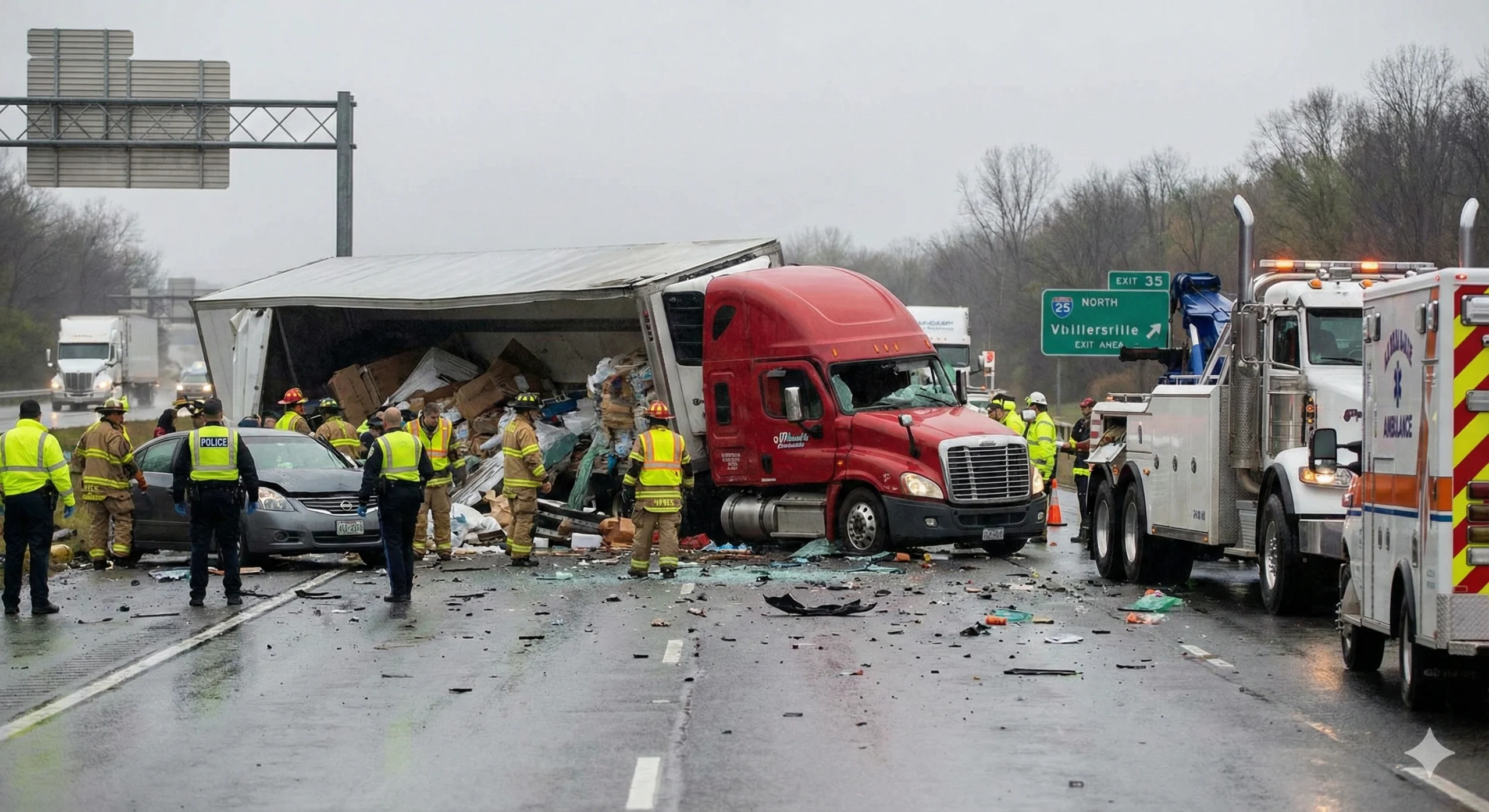
An Edmond truck accident lawyer emphasizes that immediate action following a truck crash in Edmond protects health, preserves evidence, and ensures compliance with Oklahoma statutes. Truck accidents often result in severe injuries due to the significant size and weight disparity between commercial vehicles and passenger cars, making strict adherence to post-collision procedures essential under both state and federal law. This guide details the critical steps, drawing from legal standards, case precedents, and local practices to inform those affected.

Immediate Safety Measures

The first priority after any truck accident in Edmond remains ensuring the safety of all involved parties, as commercial vehicles can create hazardous scenes with spilled cargo, leaking fuel, or blocked roadways. Drivers and passengers should exit vehicles if possible without risking further harm, activate hazard lights, and position reflective triangles or flares to warn approaching traffic, aligning with Federal Motor Carrier Safety Administration (FMCSA) guidelines for accident prevention. In Oklahoma, under Title 47 §10-103, vehicles must stop without obstructing traffic, and failure to do so can lead to misdemeanor charges, underscoring the need for calm, deliberate movement to a shoulder or median when feasible.

Local conditions in Edmond, such as busy intersections on State Highway 66 or Broadway, amplify risks, where data shows trucks contribute significantly to injury crashes statewide. An Edmond truck accident lawyer would advise against assuming minor impacts, as large trucks carry momentum that causes delayed structural failures or fires. Calling 911 promptly connects to Edmond Police Department responders trained in commercial vehicle incidents, who document the scene per Oklahoma Highway Patrol protocols.

Calling Emergency Services

Contacting law enforcement immediately after a truck accident ranks as a statutory obligation in Oklahoma, particularly for incidents involving injury, death, or property damage exceeding $500. The responding officer generates an Official Oklahoma Traffic Collision Report, essential for insurance claims and liability determinations, detailing factors like driver logs, vehicle markings, and witness statements. For truck crashes, FMCSA mandates carriers report fatal or serious injury events within specified timelines, often triggering federal investigations into hours-of-service violations or maintenance lapses.

In Edmond, reports can be requested from the police department at (405) 359-4420 for city-limit incidents, providing a factual baseline amid complex fault analyses involving multiple parties like drivers, carriers, and loaders. Delays in reporting risk evidence loss from weather or traffic, while hit-and-run scenarios by truckers escalate to felonies under Oklahoma law, with penalties up to ten years for injury-related flights. Medical teams dispatched via 911 address hidden traumas common in high-impact collisions.

Seeking Medical Evaluation

Even absent obvious injuries, professional medical assessment proves vital post-truck accident, as symptoms like whiplash, traumatic brain injuries, or internal bleeding may emerge days later, per NHTSA data on large truck crashes. Oklahoma courts require documented causation linking injuries to the event, making initial emergency room visits or follow-ups indispensable for personal injury claims under 12 O.S. §95(A)(3), which sets a two-year statute of limitations. Records from providers establish baselines for economic damages like bills and lost wages, alongside noneconomic suffering.

Truck accidents in Oklahoma saw 10,324 injury crashes from 2017-2023, highlighting prevalence in areas like Edmond near interstates. An experienced Edmond truck accident lawyer stresses compliance with treatment plans, as gaps invite insurer arguments of exaggeration. Refusal of on-scene aid does not preclude later care; however, prompt evaluation fortifies claims against comparative negligence defenses.

Documenting the Scene Thoroughly

Comprehensive documentation forms the evidentiary cornerstone after a truck accident, capturing vehicle positions, damage patterns, road conditions, and commercial markings like DOT numbers for carrier identification. Photographs of black boxes, load securement, tire conditions, and witness contacts preserve details before towing disperses evidence, crucial given Oklahoma’s 5,575 truck crashes in 2021 alone. Sketches or notes on weather, signage, and sequences aid reconstructions, often pivotal in proving breaches of FMCSA rules on braking or loading.

Eyewitness accounts carry weight in multi-party litigation, where trucker fatigue or employer negligence surfaces via logs subpoenaed later. In Edmond, urban-rural interfaces on routes like I-35 demand specifics on speed limits and visibility. Failing to gather plates, insurance info, and company names complicates pursuits, as insurers scrutinize incomplete records for denials.

Exchanging Essential Information

Oklahoma Statute §47-10-103 mandates exchanging driver licenses, registrations, and insurance proofs without admitting fault, extending to truck-specific details like USDOT numbers and cargo manifests. Recording names, contacts, and affiliations of all parties, including bystanders, prevents disputes, especially when trucking firms deploy adjusters swiftly to minimize liability. Verbal admissions risk undermining claims, so statements should limit to factual exchanges.

For commercial crashes, noting electronic logging devices or telematics aids discovery of violations like exceeding 11-hour driving limits under FMCSA. An Edmond truck accident lawyer with local insight navigates these exchanges, as Oklahoma County logged 1,300 truck incidents recently. Preserve business cards from responding personnel for report access.

Notifying Insurance Carriers

Prompt notification to your insurer fulfills policy duties, typically within 24 hours, detailing the truck accident without speculating on fault to avoid prejudicing settlements. Oklahoma mandates minimum liability of 25/50/25 for autos, but trucks require higher federal minimums, exposing underinsured gaps recoverable via personal policies or claims against carriers. Insurers initiate appraisals, yet trucking entities often self-insure, prolonging processes amid investigations.

Claims involve economic losses like repairs and medicals, plus pain thresholds without caps post-Oklahoma Supreme Court rulings. Delays notify statutes, as two years elapse quickly in litigious truck cases. Coordinate with all parties’ carriers cautiously, preserving rights.

Edmond truck accident

Consulting an Experienced Professional

Engaging a knowledgeable attorney early clarifies liabilities in truck accidents, where vicarious responsibility under respondeat superior holds employers for driver negligence, alongside direct claims for hiring flaws as in Fox v. Mize. An experienced professional familiar with Edmond nuances assesses FMCSA violations, black box data, and expert needs for causation proofs. Timing matters, as discovery tolls preserve evidence before spoliation.

Complexities arise from interstate commerce, invoking federal preemption. Local stats, like 875 fatal truck crashes statewide 2017-2023, underscore stakes. Initial consultations map strategies without upfront commitments.

Understanding Oklahoma Deadlines

Oklahoma’s two-year statute under 12 O.S. §95 governs truck personal injury suits from accident dates, with rare tolling for minors or incapacity. Missing bars recovery forever, emphasizing diligence amid insurer delays. Wrongful death follows suit, prioritizing procedural filings.

Truck specifics like federal reporting add layers; carriers maintain accident registers for three years per FMCSA. Courts enforce strictly, dismissing late claims.

Potential Liabilities Involved

Fault determination blends Oklahoma’s modified comparative negligence with FMCSA scrutiny on driver quals, maintenance, and hours. Employers face negligent entrustment if history ignored, as precedents affirm. Multiple defendants—trucker, firm, manufacturer—demand apportioned recoveries.

State data reveals trucks in 16.5% crash upticks, often multi-vehicle. Evidence like logs proves breaches.

Federal Trucking Regulations

FMCSA oversees interstate trucks via hours-of-service (11/14 rules), inspections, and reporting for crashes with injury/fatality. Violations bolster negligence per se claims, with carriers liable for systemic failures. Oklahoma aligns, mandating compliance.

Local Edmond Considerations

Edmond’s growth strains roads, with six fatal multi-vehicle crashes in 2022. Police handle reports efficiently, but truck volume on I-35 warrants specialized handling. www.fmcsa.dot.gov details federal stats.

Edmond truck accident lawyer

FAQ

What immediate steps follow a truck accident in Edmond?

Following a truck accident in Edmond, prioritize safety by moving to safe spots if possible, activating warnings, and dialing 911 for police and medical response, as mandated by Oklahoma Title 47 statutes and FMCSA protocols to document and secure the scene. Documentation via photos of damage, positions, and truck identifiers preserves evidence for liability probes, while exchanging info without admissions complies with exchange laws, setting foundations for claims within the two-year limit. Medical checks address latent injuries prevalent in such high-force impacts, per NHTSA patterns.

How does Oklahoma determine fault in truck crashes?

Oklahoma employs modified comparative fault, assigning percentages via evidence like police reports, telematics, and witness accounts, integrating FMCSA violations as negligence per se for drivers exceeding hours or poor maintenance. Courts review employer roles under respondeat superior and entrustment doctrines, as in precedents shifting burdens. Multi-party apportionment follows, barring recoveries over 50% fault.

What is the statute of limitations for an Edmond truck accident lawyer claim?

Under 12 O.S. §95(A)(3), claimants have two years from injury dates for personal injury or wrongful death suits post-truck accident, with strict enforcement absent tolling exceptions like discovery rules or minors. Federal overlays for interstate carriers demand prompt filings to subpoena logs before purging. Missing forfeits remedies entirely.

Why seek medical care even without visible injuries?

Truck accidents generate forces causing delayed conditions like concussions or spinal trauma, undocumented initially weakening causation links required in Oklahoma proofs. Early records counter insurer minimizations, supporting damages encompassing futures under no-cap noneconomics post-constitutional rulings. Compliance aids holistic recoveries.

How do FMCSA rules impact truck accident claims?

FMCSA mandates reporting for serious crashes, hours logs, and registers, violations evidencing negligence actionable in state courts via preemption doctrines. Carriers face direct liability for non-compliance, enhancing victim recoveries through expert analyses of ELDs and inspections. Oklahoma integrates these federally.

What role does documentation play post-crash?

Thorough photos, notes, and info exchanges form irreplaceable evidence amid towing and memory fades, crucial for reconstructing sequences proving breaches like improper lanes or loads in Oklahoma’s high-truck volume. Courts rely on these over self-serving statements, fortifying against defenses in litigated claims.

admin December 11, 2025 Leave A Comment Permalink