
The Role of an Irvine lemon law attorney in Resolving Warranty Disputes
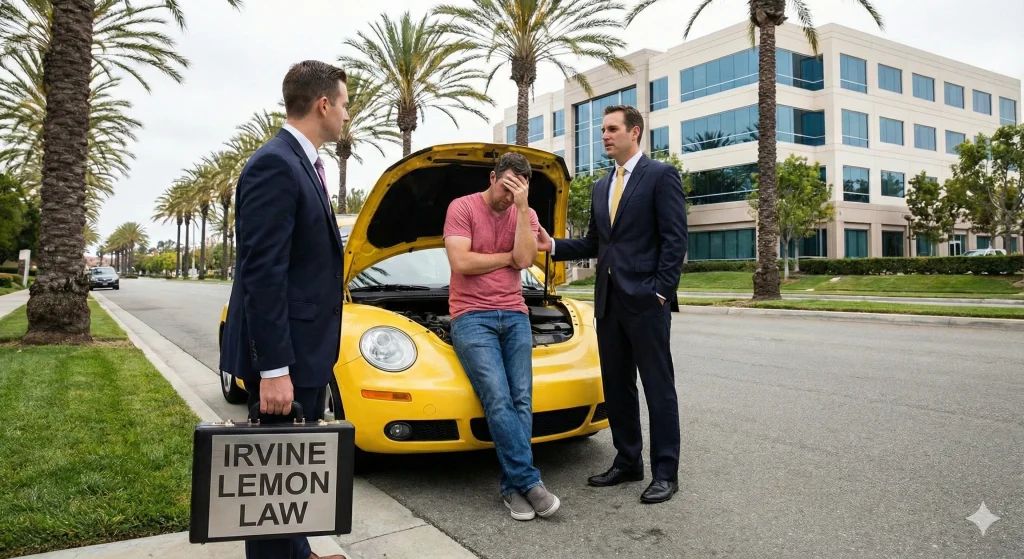
When consumers in Irvine encounter persistent defects in their new or used vehicles covered by manufacturer warranties, the involvement of an Irvine lemon law attorney becomes essential for enforcing statutory protections under California’s Song-Beverly Consumer Warranty Act. This legislation, codified in Civil Code sections 1790 through 1795.8, mandates that manufacturers repair substantial defects within a reasonable number of attempts or provide restitution, such as a refund or replacement vehicle. The role of an Irvine lemon law attorney centers on meticulously documenting repair histories, assessing whether defects substantially impair the vehicle’s use, value, or safety, and guiding clients through pre-litigation negotiations or formal proceedings.
In practice, warranty disputes often arise when initial repairs fail to resolve issues like electrical malfunctions, transmission failures, or braking system anomalies that pose safety risks. California courts have consistently interpreted “substantial impairment” broadly, as seen in cases where repeated repair attempts exceed the statutory presumption threshold of two attempts for safety defects or four for other serious issues within 18,000 miles or 18 months. An Irvine lemon law attorney evaluates these thresholds against the vehicle’s service records to determine eligibility, ensuring compliance with timelines that trigger manufacturer obligations. This process demands a nuanced understanding of both express and implied warranties, where implied warranties of merchantability guarantee a vehicle fit for ordinary purposes without excessive downtime.
Understanding California’s Lemon Law Framework
California’s lemon law framework, primarily the Song-Beverly Consumer Warranty Act, applies to vehicles purchased or leased for personal, family, or business use within the state, extending protections to both new vehicles and used ones still under an active new-car warranty. Manufacturers bear the burden of proof once the presumption arises, meaning they must demonstrate that defects were fixed or did not substantially impair the vehicle. Recent legislative updates, including Assembly Bill 1755 effective in 2025, introduce streamlined procedures such as mandatory pre-suit notices and expedited mediation to accelerate resolutions while preserving consumer rights.
The Act distinguishes between express warranties—specific promises in sales contracts or manuals—and implied warranties arising by operation of law, both enforceable against warrantors like original equipment manufacturers. For instance, a defect must not only exist but persist after reasonable repair opportunities, typically defined as those failing within the warranty period. An Irvine lemon law attorney scrutinizes these elements by compiling repair orders, odometer readings, and correspondence with dealers, building a chronological narrative that courts recognize as evidence of nonconformity. Public safety principles underpin this framework, as unresolved defects can lead to hazardous conditions on roads frequented by Irvine commuters.
Disputes frequently involve high-value assets like sedans or SUVs from major manufacturers, where downtime equates to financial loss through rental costs or lost use. The Department of Consumer Affairs oversees arbitration options for certified programs, providing an informal alternative to litigation monitored for fairness. Legislative intent emphasizes swift restitution to deter manufacturers from prolonging repairs unnecessarily, a pattern addressed in rising caseloads from 15,000 in 2022 to over 25,000 by 2024.
Qualities of Defects Covered by Warranty Protections
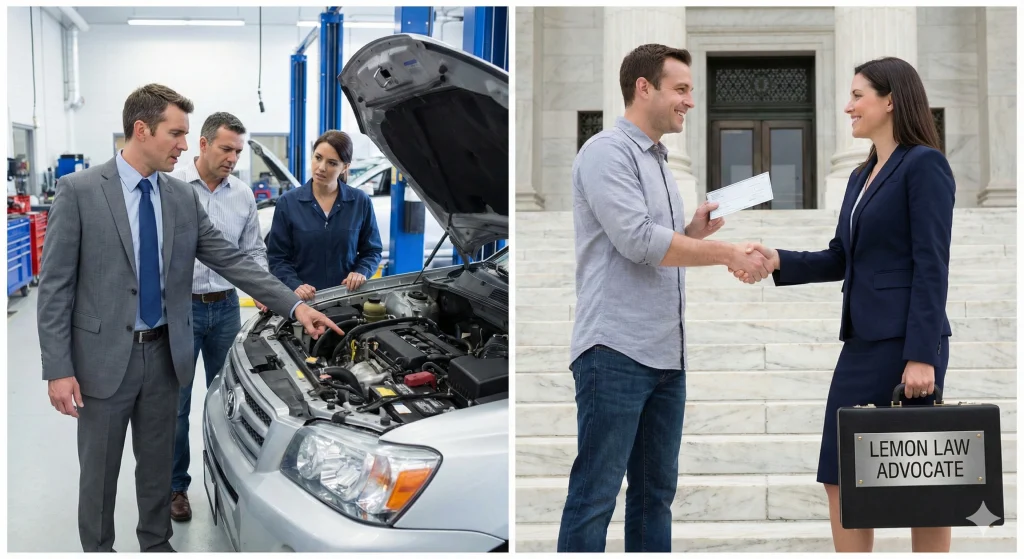
Warranty protections under the Song-Beverly Act target nonconformities that a reasonable buyer would not have anticipated, ranging from engine failures rendering the vehicle inoperable to software glitches affecting advanced driver-assistance systems. Courts assess impairment through objective standards, considering factors like repair frequency, duration of downtime, and safety implications, as articulated in precedents like Jensen v. BMW of North America. An Irvine lemon law attorney identifies these by cross-referencing defects against technical service bulletins or recalls issued by the National Highway Traffic Safety Administration.
Safety-related defects receive heightened scrutiny, presuming lemon status after just two failed repair attempts, reflecting California’s commitment to roadway integrity in densely populated areas like Orange County. Non-safety defects, such as chronic air conditioning failures or infotainment malfunctions diminishing value, require four attempts or 30 cumulative business days out of service. This quantitative framework guides initial case evaluations, where attorneys calculate thresholds precisely to advise on viable claims. Diminished value claims further compensate for resale depreciation caused by documented issues, even if safety remains intact.
Evolving vehicle technologies introduce complexities, like battery degradation in electric models or autonomous feature unreliability, both potentially qualifying if they frustrate ordinary use. Statutory language in Civil Code section 1793.22 imposes service obligations on dealers, including prompt loaner provisions, violations of which bolster attorney arguments for bad faith. Irvine’s proximity to major ports and tech hubs amplifies exposure to imported vehicles prone to warranty gaps.
Initial Case Evaluation by an Irvine lemon law attorney
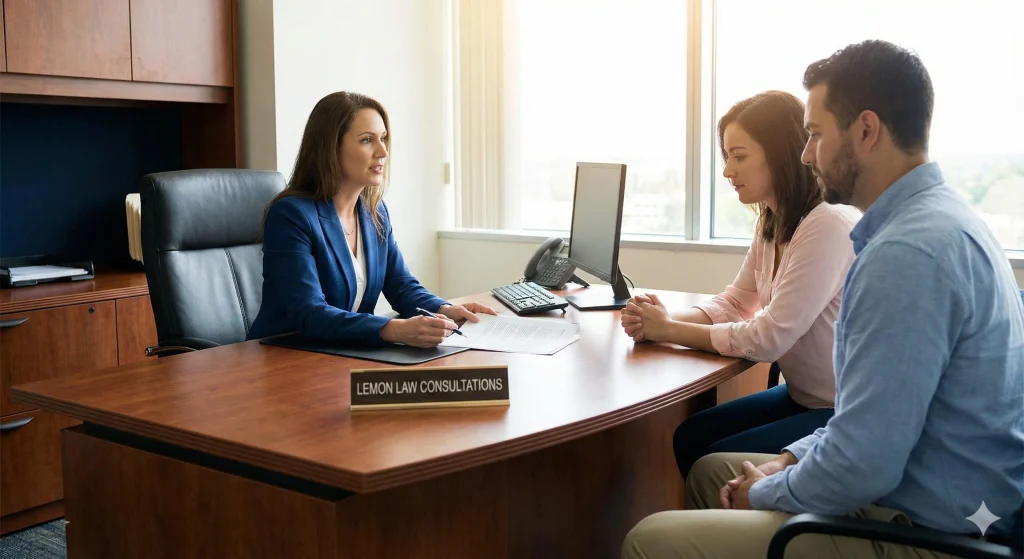
The evaluation process begins with a comprehensive review of purchase documents, warranty terms, and all repair invoices to confirm coverage and timeline adherence. An Irvine lemon law attorney verifies that the vehicle was sold in California, a jurisdictional prerequisite, and quantifies defect persistence against statutory presumptions. This step uncovers ancillary violations, such as failure to provide replacement transportation during extended repairs, actionable under the Tanner Consumer Protection Act.
Documentation forms the evidentiary core, with attorneys requesting complete service histories from dealerships and manufacturers to reconstruct defect timelines. Expert inspections often follow, appraising impairment through diagnostic scans or test drives, particularly for intermittent issues evading prior fixes. Case strength hinges on demonstrating that manufacturers received reasonable opportunities yet failed, shifting the burden per Civil Code section 1795.7. Weak claims, like isolated minor issues, get flagged early to manage expectations.
Pre-litigation viability assessments consider statutes of limitations, now refined under AB 1755 to one year post-warranty expiration or six years from delivery. Attorneys weigh settlement potential against litigation costs, noting that most disputes resolve pre-trial due to fee-shifting provisions incentivizing manufacturer compliance. Irvine-specific factors, like local dealer networks, influence strategy.
Pre-Litigation Negotiation Strategies
Negotiations commence with a detailed demand letter outlining defects, repair attempts, and requested remedies, often prompting manufacturer repurchase offers under statutory timelines. An Irvine lemon law attorney leverages evidence packages to pressure concessions, including full refunds calculated as purchase price minus usage offset via the mileage formula in Civil Code section 1793.2(d). Incidental damages like towing fees and storage accrue automatically, enhancing leverage.
Manufacturers frequently counter with partial settlements or additional repair offers, which attorneys dissect for compliance with prior commitments. AB 1755 mandates 30-day acknowledgments and 60-day resolutions for opt-in firms, with penalties for delays, streamlining this phase. Neutral mediation via the New Motor Vehicle Board serves as a bridge, binding outcomes enforceable in court. Persistent non-conformity justifies escalation.
Skilled negotiators anticipate defenses like normal wear exclusions or third-party modifications, rebutting with case law such as Kwan v. Mercedes-Benz, affirming broad consumer protections. Irvine attorneys familiarize with regional arbitration certified by the Department of Consumer Affairs’ program, expediting informal hearings.
Litigation Procedures Involving an Irvine lemon law attorney
Litigation unfolds in Orange County Superior Court, where an Irvine lemon law attorney files complaints alleging breach of express and implied warranties alongside Song-Beverly violations. Discovery mandates early document exchanges under recent reforms, accelerating fact-finding on repair efficacy. Motions for summary judgment target clear presumption cases, conserving resources.
Trial preparation involves deposing manufacturer representatives and securing expert testimony on defect permanence, crafting narratives that juries grasp. Attorneys counter defenses invoking warranty disclaimers or contributory negligence, citing precedents upholding consumer burdens only pre-presumption. Civil penalties up to twice the damages for willful violations deter recalcitrance.
Post-2025 procedures cap filings at six months for mediation, with binding arbitration options for fees. Appeals remain rare, given fee recovery favoring prevailing consumers. An Experienced Irvine lemon law attorney navigates these to optimize outcomes.
Recent Legislative and Case Law Developments
AB 1755 and SB 26 reshape dispute resolution, offering manufacturers irrevocable five-year opt-ins for expedited processes or adherence to traditional statutes. Courts interpret expansions to used vehicles with active warranties, as in appellate reversals affirming Song-Beverly applicability. Rising filings prompted these efficiencies without diluting remedies.
Game-changing cases highlight enforcement challenges, like surges in electronic defect claims straining systems. Legislative responses mandate pre-suit notices, enabling 30-day repurchase windows. Irvine practitioners adapt to these, enhancing predictability.
Arbitration Certification Program evolutions promote certified programs, delivering decisions in 40 days. Non-compliance invites statutory defaults.
Remedies Available Under the Song-Beverly Act
Restitution refunds purchase price adjusted for mileage, plus collateral charges like sales tax and finance fees, minus reasonable use. Replacement mandates comparable vehicles without defects. Attorneys pursue cash equivalents where refunds prove superior.
Incidental and consequential damages cover rentals, repairs, and losses, with attorney fees statutorily awarded to deter meritless denials. Bad faith incurs penalties doubling amounts. For details on arbitration, consult the California Department of Consumer Affairs Arbitration Certification Program.
Role of an Irvine lemon law attorney in Post-Resolution Enforcement
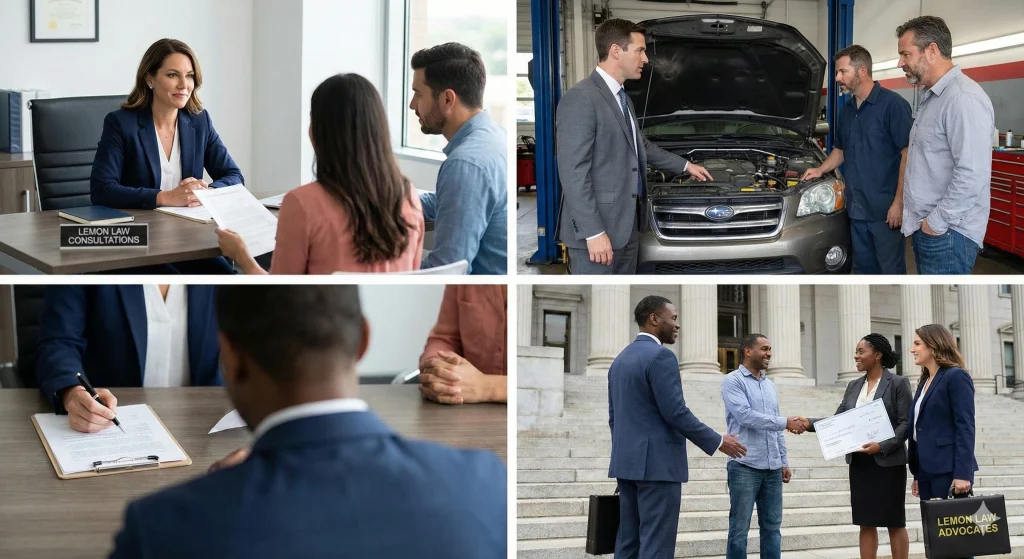
Enforcement ensures timely payments per settlement terms, pursuing daily penalties for delays. Attorneys monitor vehicle returns and fund disbursements, litigating breaches as contract actions. Long-term warranties on replacements get scrutinized.
FAQ
What qualifies a vehicle as a lemon under California law handled by an Irvine lemon law attorney?
A vehicle qualifies as a lemon if it suffers from substantial defects impairing its use, value, or safety that persist after a reasonable number of repair attempts by the manufacturer or authorized dealer, as defined in the Song-Beverly Consumer Warranty Act. This typically includes two failed attempts on safety defects or four on others, alongside 30 days out of service within the warranty period or 18 months/18,000 miles. An Irvine lemon law attorney assesses these criteria by reviewing service records and applying statutory presumptions, ensuring the nonconformity arose despite proper maintenance and falls within jurisdictional limits for California-sold vehicles.
How does the Song-Beverly Act process work before involving an Irvine lemon law attorney?
Consumers must first afford the manufacturer reasonable repair opportunities, documenting each attempt with invoices and communications, before escalating via demand letters or arbitration. Recent AB 1755 procedures require 30-day pre-suit notices for opt-in manufacturers, prompting restitution within 60 days or litigation rights. This framework prioritizes negotiation, with the Department of Consumer Affairs facilitating certified arbitrations as alternatives to court, emphasizing procedural fairness and timely resolutions without initial attorney involvement.
What defenses do manufacturers raise in warranty disputes with an Irvine lemon law attorney?
Manufacturers often assert defects resulted from abuse, modifications, or normal wear outside warranty scope, or that repairs succeeded sufficiently. They may challenge impairment substantiality or timeline compliance. Attorneys counter with evidence like expert reports and precedents affirming broad protections, shifting burdens post-presumption and invoking penalties for unreasonable refusals under Civil Code section 1794.
Can used vehicles qualify for lemon law remedies through an Irvine lemon law attorney?
Yes, used vehicles qualify if covered by an active new-car express warranty at purchase, as affirmed in appellate decisions extending Song-Beverly protections beyond initial owners. Implied warranties apply to used sales with dealer assurances, provided claims arise within four years. An Irvine lemon law attorney verifies warranty remnants and defect histories to pursue refunds or replacements equivalently.
What timelines apply to filing a lemon law claim with an Irvine lemon law attorney?
Claims must align with warranty expiration plus one year under AB 1755, capped at six years from delivery, with tolling for repair periods. Express breaches tie to warranty duration, implied to four years post-purchase. Prompt documentation preserves these windows, as delays forfeit presumptions.
How are refunds calculated in resolutions by an Irvine lemon law attorney?
Refunds aggregate purchase price, taxes, fees, and paid interest, offset by reasonable mileage usage at federal rates, excluding excessive wear. Incidental costs like towing add fully, with manufacturers bearing attorney fees. Settlements often mirror this formula, enforced via releases.


